
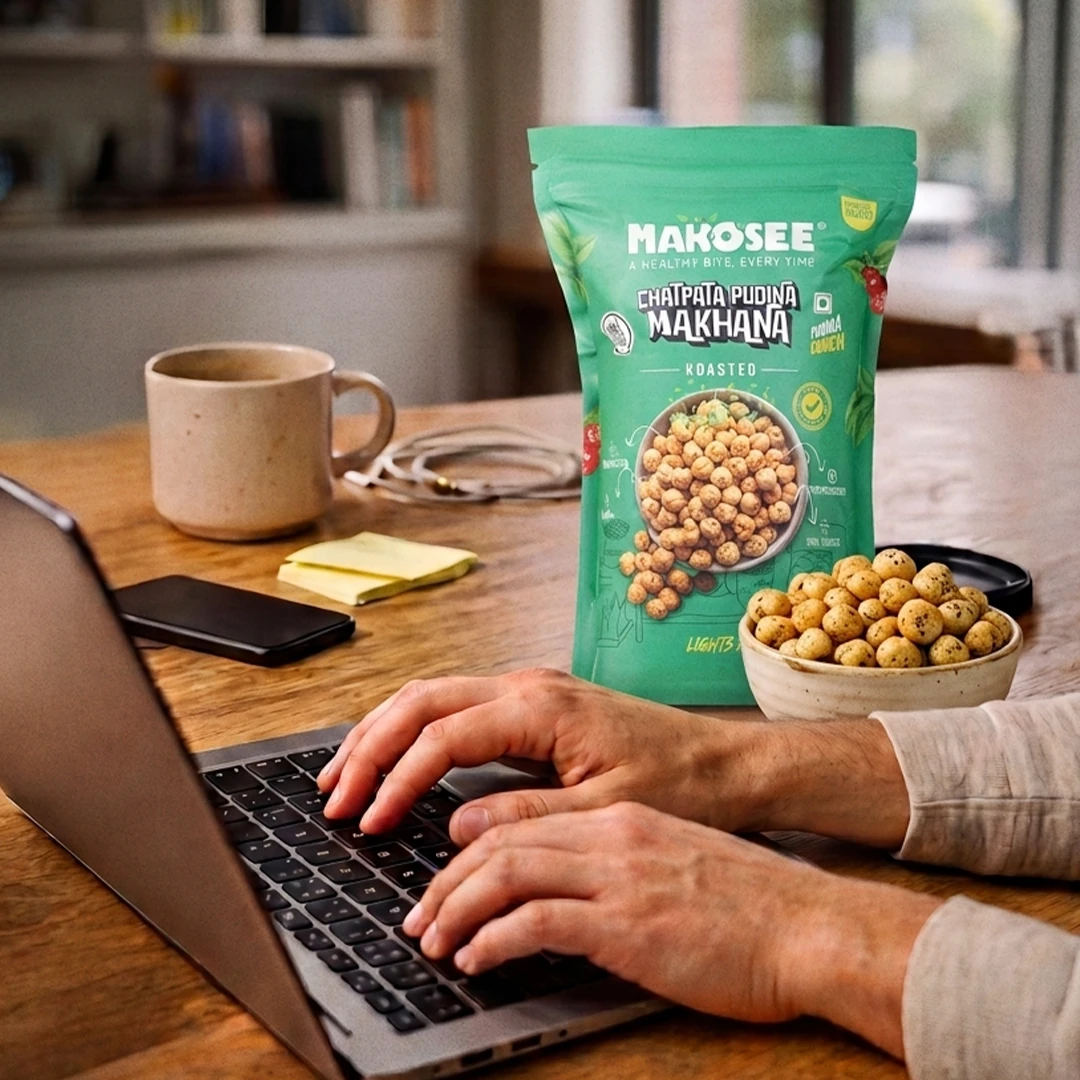
Makhana nutrition depends on whether you mean plain popped kernels, a home recipe or a ready-to-eat flavoured pouch. Use the nutrition panel of the exact product and compare serving sizes before comparing calories or protein.
What is in plain makhana?
Plain makhana provides carbohydrate and some protein and fibre, with numbers changing by variety, moisture and serving size. Roasting with oil or turning it into kheer adds energy and nutrients.
| Compare | Why it matters |
|---|---|
| Per 100 g vs per serving | A serving is usually much smaller than 100 g |
| Plain vs flavoured | Oil, salt and seasoning change nutrition |
| Dry snack vs kheer | Milk and sweetener add to the recipe |
| Raw vs popped | Processing changes weight, texture and use |
How to read the nutrition panel
Find the serving size
Note grams per serving and servings per pack.
Check energy and macros
Look at calories, protein, carbohydrate, fat and fibre for the portion you will eat.
Read ingredients and allergens
The ingredient list explains why two products can differ.
Match it to your goal
Use the label with your broader meal plan, not as a standalone health verdict.
Do not over-read a single nutrient
Searches often ask for one number—calories, protein or vitamins—but the practical decision is usually about the whole bowl. A measured portion, simple preparation and a varied diet are more useful than a viral nutrition claim.
Frequently asked questions
How many calories are in makhana?
Calories vary by serving size and preparation. Plain kernels, a flavoured roasted pouch and kheer will not have the same number.
Is makhana high in protein?
Makhana contains some plant protein, but it should not automatically be treated as a complete high-protein meal. Check the label.